The deeper we looked into how the TSIS situation moved through institutional channels, the more difficult it became to separate it from broader questions already emerging elsewhere inside the IMB.
In 2024, before many later disclosures connected to TSIS entered IMB channels, dozens of current and former International Mission Board (IMB) missionaries collectively submitted a letter to IMB trustees describing concerns involving leadership culture, retaliation fears, reporting failures, spiritual abuse, and institutional response dynamics within the organization itself.
The letter was signed by a substantial number of current and former missionaries.
The signers described not only difficult leadership experiences, but fear surrounding the reporting process itself.
“Some of us are still employed by the IMB… and have therefore chosen to sign this document anonymously, fearful of retaliation.”
Later in the letter, the signers added:
“Even for those of us who are no longer with the company… we still, even now, fear that the IMB will somehow retaliate against us.”
The letter was first submitted to trustees on April 30, 2024, after earlier conversations with trustees that year had already prompted the formation of a trustee task force to review the concerns being raised.
The concerns described in the letter were not limited to personality conflicts or isolated disagreements. Again and again, the signers returned to questions involving reporting pathways, leadership accountability, and organizational response.
“In such cases, we often reported our concerns to leadership up the chain or to Human Resources, and, in such cases, help did not come; in fact, our situation often worsened.”
The letter repeatedly described situations in which missionaries felt unable to safely resolve concerns through existing institutional structures.
One of the most striking portions of the letter involved how the signers believed organizational narratives were being formed internally.
“For many years now, the company has openly acknowledged that the number one reason personnel leave the field is ‘team conflict.’ However, we believe that to be a partial truth.”
The signers then argued that these conflicts often involved authority dynamics rather than merely interpersonal disagreement:
“Nearly always, in our experience, team conflict is conflict between someone in a position of authority…”
Importantly, the letter was not written by people describing themselves as opponents of the organization or hostile to missionary work itself.
Quite the opposite.
“We loved what we were doing. We wanted to stay.”
Throughout the document, the signers repeatedly emphasized that many of them had hoped to remain on the field and viewed their concerns not as attacks on the organization itself, but as warnings about organizational health, leadership culture, and accountability structures.
The Trustee Response
The trustees did not dismiss the concerns outright.
Over the following months, a trustee task force reviewed the letter, spoke with missionaries, examined exit interviews, met with HR and Member Care leadership, and later reported its findings to executive leadership and the broader trustee body.
On October 16, 2024, IMB trustees issued a formal written response.
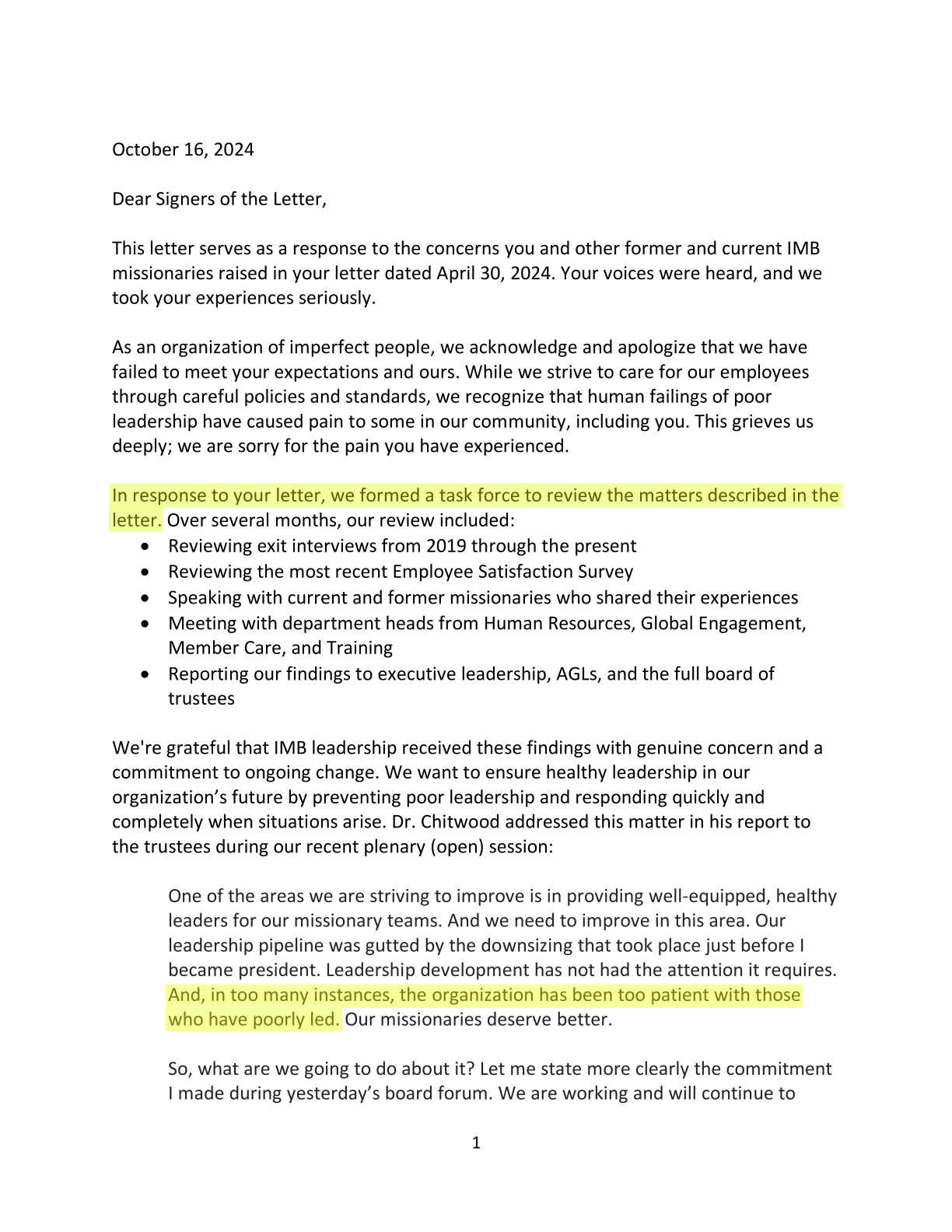
Excerpt from the October 16, 2024 trustee response addressing the missionary letter and outlining organizational reforms.
In that response, trustees described a series of organizational reforms involving anonymous reporting pathways, abuse-response procedures, leadership development initiatives, HR restructuring, outside investigative consultation, and expanded accountability structures.
The response also included this statement from IMB President Paul Chitwood:
“in too many instances, the organization has been too patient with those who have poorly led.”
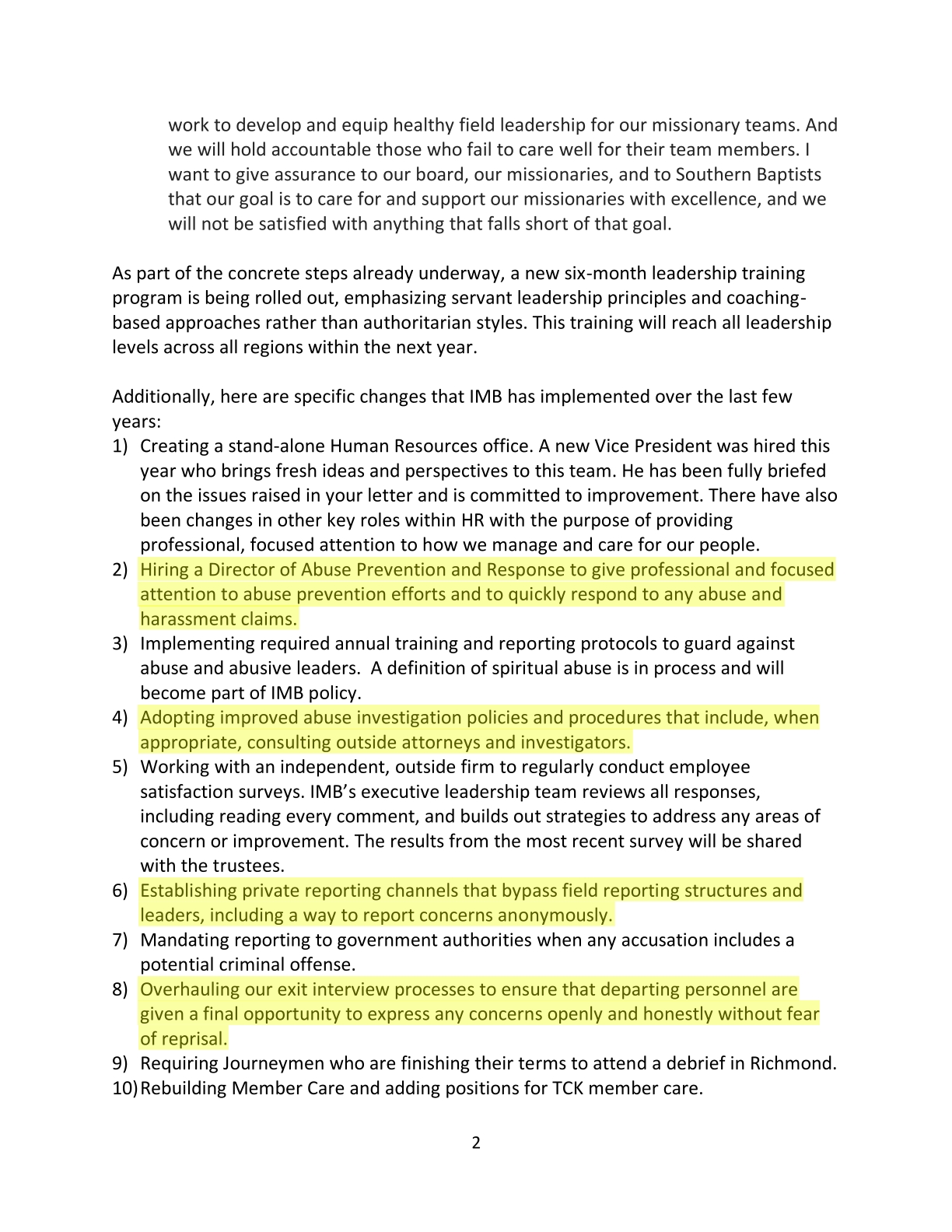
Portion of the October 2024 trustee response outlining reforms related to leadership accountability, abuse prevention, and reporting structures.
The trustee response framed these reforms as part of an effort to better address leadership failures, reporting concerns, and missionary care.
Why This Matters in Context
Months later, when safeguarding concerns connected to Tien Shan International School began escalating into IMB channels, they entered an institutional environment already wrestling with broader questions involving reporting trust, leadership culture, accountability structures, and organizational response dynamics.
This does not mean separate situations were identical.
Nor does the 2024 missionary letter “prove” what later occurred surrounding TSIS.
But the thematic overlap became difficult to ignore.
As the TSIS situation unfolded, later communications and institutional interactions increasingly raised additional questions involving:
- how information moved internally
- how concerns were framed as they escalated upward
- how communication pathways were managed
- and how institutional confidence in key individuals developed during active safeguarding processes
At various stages, we encountered communications that appeared aimed at centralizing or carefully managing the flow of information during active review processes. Other communications revealed internal narrative concerns, routing dynamics, or strong institutional confidence in leadership figures while broader concerns were still unfolding.
Later communications connected to the TSIS escalation also raised questions about how information moved internally through institutional channels.
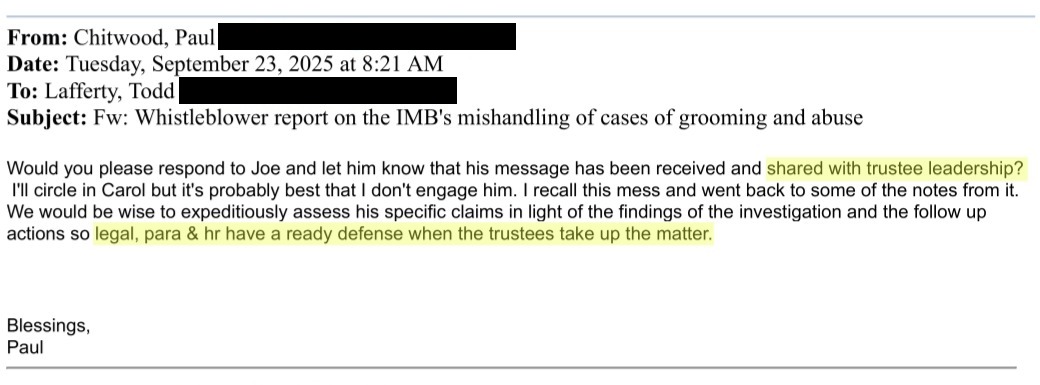
Excerpt from an internal IMB email chain discussing trustee communication and institutional response following a whistleblower submission.
Viewed independently, none of these communications necessarily establish wrongdoing.
Viewed together, however, they begin to illuminate how institutional systems function under pressure.
Questions That Remain
None of these documents prove that separate situations were identical.
But they do raise important questions.
What happens when later safeguarding concerns enter systems already internally wrestling with trust, reporting failures, leadership accountability, and institutional culture?
How do institutions distinguish between confidentiality, organizational protection, and transparency?
How are concerns interpreted as they move upward through overlapping authority structures?
What happens when organizational loyalty, leadership confidence, and safeguarding responsibilities begin interacting simultaneously?
And what happens when multiple independent groups begin describing similar institutional dynamics?
This post is also published on Substack:
tsisaccountability.substack.com/p/before-tien-shan-what-imb-had-already