The April 23, 2025 HR call made it clear that our time on the field was coming to an end.
What it did not make clear was what would happen next.
For months, we had worked almost exclusively through internal channels.
We had reported concerns through the school’s child safeguarding processes.
We had participated in investigations.
We had met with leaders.
We had submitted documentation.
We had continued raising concerns through supervisory structures.
Even when those processes became frustrating, we continued to believe that if we simply provided enough information, eventually the right people would take appropriate action.
The weeks that followed the HR call began to challenge that belief.
The Consulate
Just days before the HR call, a friend from another international school encouraged me to contact the Regional Security Officer at the U.S. Consulate in Almaty.
The choice to do so was not driven by a desire to bypass existing processes.
Rather, it reflected a growing concern that the information we had been reporting was not carrying the weight we believed it should.
On April 20, 2025, I emailed the RSO regarding the child safeguarding situation at Tien Shan International School and my concerns about the potential loss of institutional memory as leadership transitions approached.
He responded the same day and requested additional information.
The following day, while renewing my passport at the Consulate, I met with him in person.
Afterward, he requested a follow-up phone call.
During that conversation, one of the questions he asked was who employed key individuals connected to the situation. I answered his questions honestly, though doing so created significant anxiety. For years, protecting the identities and organizational affiliations of personnel serving overseas had been deeply ingrained in us.
The conversation was notable because it was one of the first times the discussion extended beyond the boundaries of a school issue and into the broader network of organizations connected to the school.
At the time, I had not completely concluded that internal processes had failed.
But I was beginning to wonder whether internal processes alone would be sufficient.
Leadership Changes Behind the Scenes
During this same period, leadership changes were occurring behind the scenes.
We learned that a specific IMB leader had been asked by organizational leadership to step out of all of his leadership roles effective immediately.
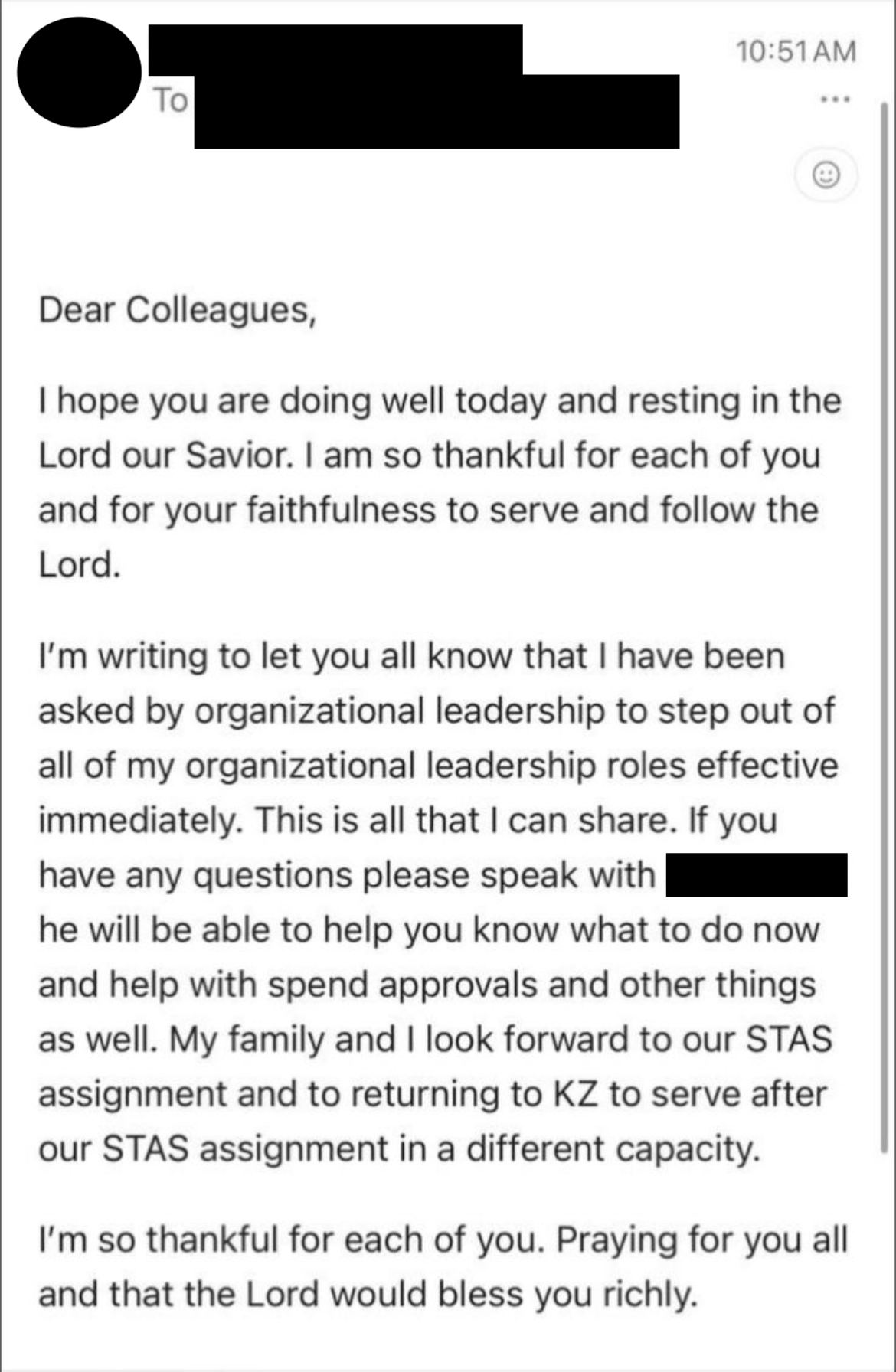
A separate communication described the situation as “incredibly difficult and painful” while also stating that details could not be discussed.
We do not claim to know every factor that contributed to those decisions.
What we do know is that significant leadership changes were occurring at the same time that safeguarding concerns, organizational discussions, and reporting efforts continued to unfold.
From our vantage point, it reinforced the sense that events surrounding the situation had expanded far beyond the boundaries of a school matter.
Reporting Harm Involving IMB Children
On May 21, 2025, I submitted multiple disclosures involving children of IMB families to IMB’s PARA.
The disclosures involved separate incidents, different staff members, and concerns that had been shared with me by students, alumni, and families over a period of years.
Some involved alleged grooming-related behavior.
Others involved verbal, emotional, and spiritual harm.
In each case, I identified the individuals involved, provided the information I had received, and documented who else possessed knowledge of the situation.
The reports were acknowledged; I was informed that the information was being reviewed as IMB continued working with the school.
However, I was never asked any follow-up questions.
This was not simply a question of process. To my knowledge, at least one individual identified in those disclosures remains in a position involving students, yet I was never informed whether the concerns had been reviewed, investigated, substantiated, or otherwise resolved.
To this day, I am aware of at least one student connected to those reports who, to my knowledge, was never contacted regarding the concerns that had been submitted.
The question that increasingly weighed on us was simple:
What happens when someone reports harm involving missionary children?
At that point, we no longer knew the answer.
Further Student Disclosures
During this same period, after we had landed in the U.S., another concern emerged.
Multiple students reached out to me directly regarding events unfolding at the school.
Importantly, these were not conversations I initiated.
Several were attempting to understand what was happening as the safeguarding controversy continued to affect the school community. Others shared concerns about conversations they had experienced with school leadership regarding the situation.
On May 28, 2025, a student informed me that Hans Fung was meeting individually with students to explain what had “really happened” concerning the safeguarding situation and the broader controversy surrounding it.
The student later reported that Hans had described me as “delusional” and suggested that my concerns stemmed from personal difficulties rather than legitimate safeguarding concerns.
The explanation reportedly included the claim that I:
- had developed a false belief that the school was abusive toward children and
- had become unwilling to work through concerns with others.
The student expressed confusion regarding those explanations.
Another observation shared with me was equally striking:
I feel like all the adults here are trying desperately to control what we think.
Whether that perception was accurate or not, it reflected how at least some students were experiencing the situation.
What stood out to me was that these conversations were occurring with students who had already been directly affected by the controversy and who were actively trying to understand events unfolding around them.
I reported the disclosures through IMB channels.
Shortly afterward, I received an email from my new supervisor within IMB HR requesting that I refrain from communicating with students about the school “in order to not escalate the situation.”
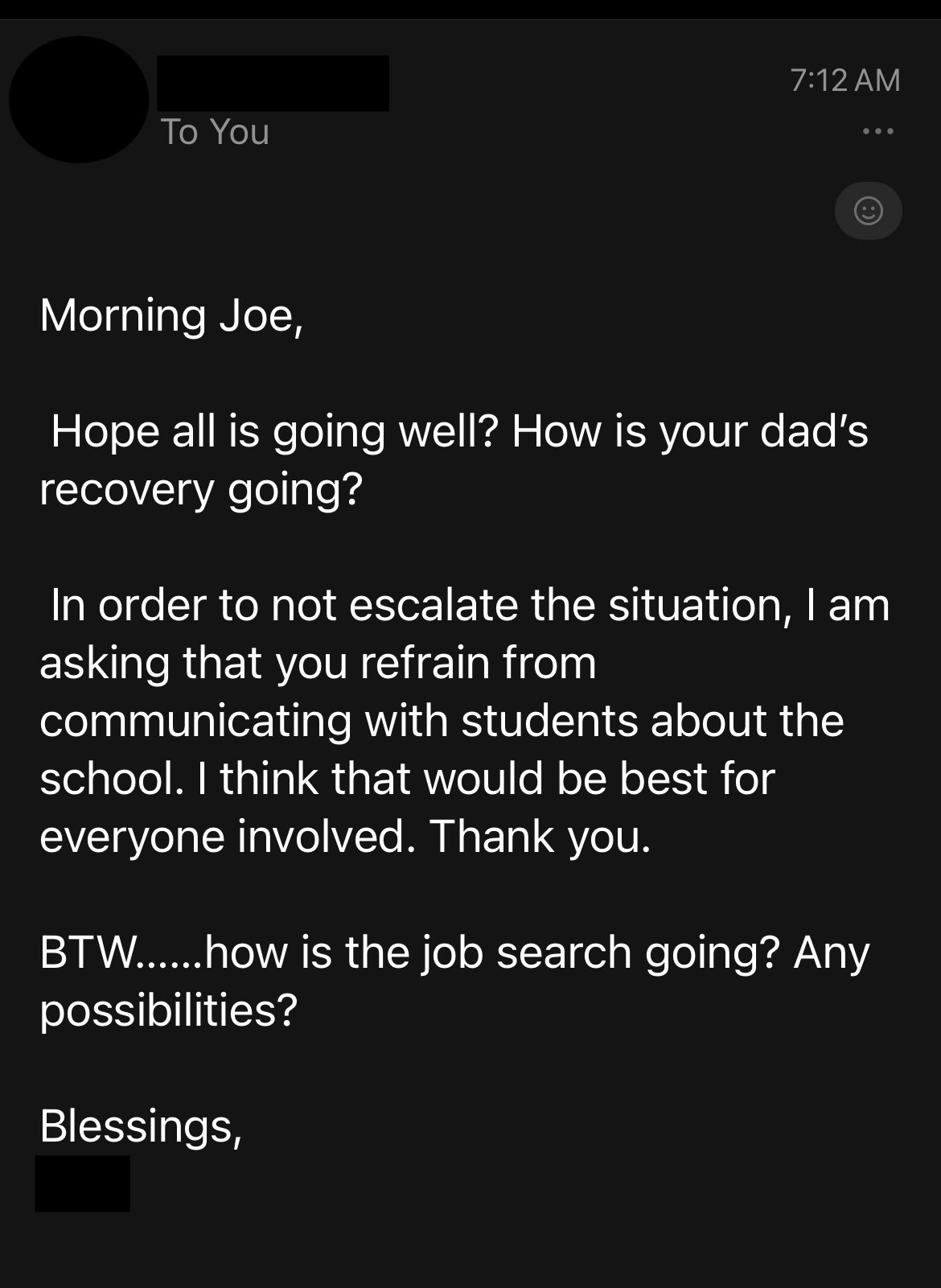
What made the instruction difficult was that the students had approached me.
I had not sought them out.
The students were reaching out because they were confused, concerned, and attempting to make sense of events that were affecting their community.
Looking back, the request felt particularly significant because it was not the first time concerns had arisen after a student voluntarily disclosed information to me.
Earlier in the year, concerns had likewise been raised following a student disclosure connected to the safeguarding situation.
In both instances, the students initiated the conversations.
In both instances, the primary response directed toward me involved limiting or discouraging further communication.
I do not claim to know the motivations behind those decisions.
I do know that, from my vantage point, a recurring pattern emerged: students continued bringing concerns forward, while I was repeatedly instructed to step back from conversations involving those concerns.
The result was a growing sense that managing the flow of information had become a significant concern in its own right.
The Training
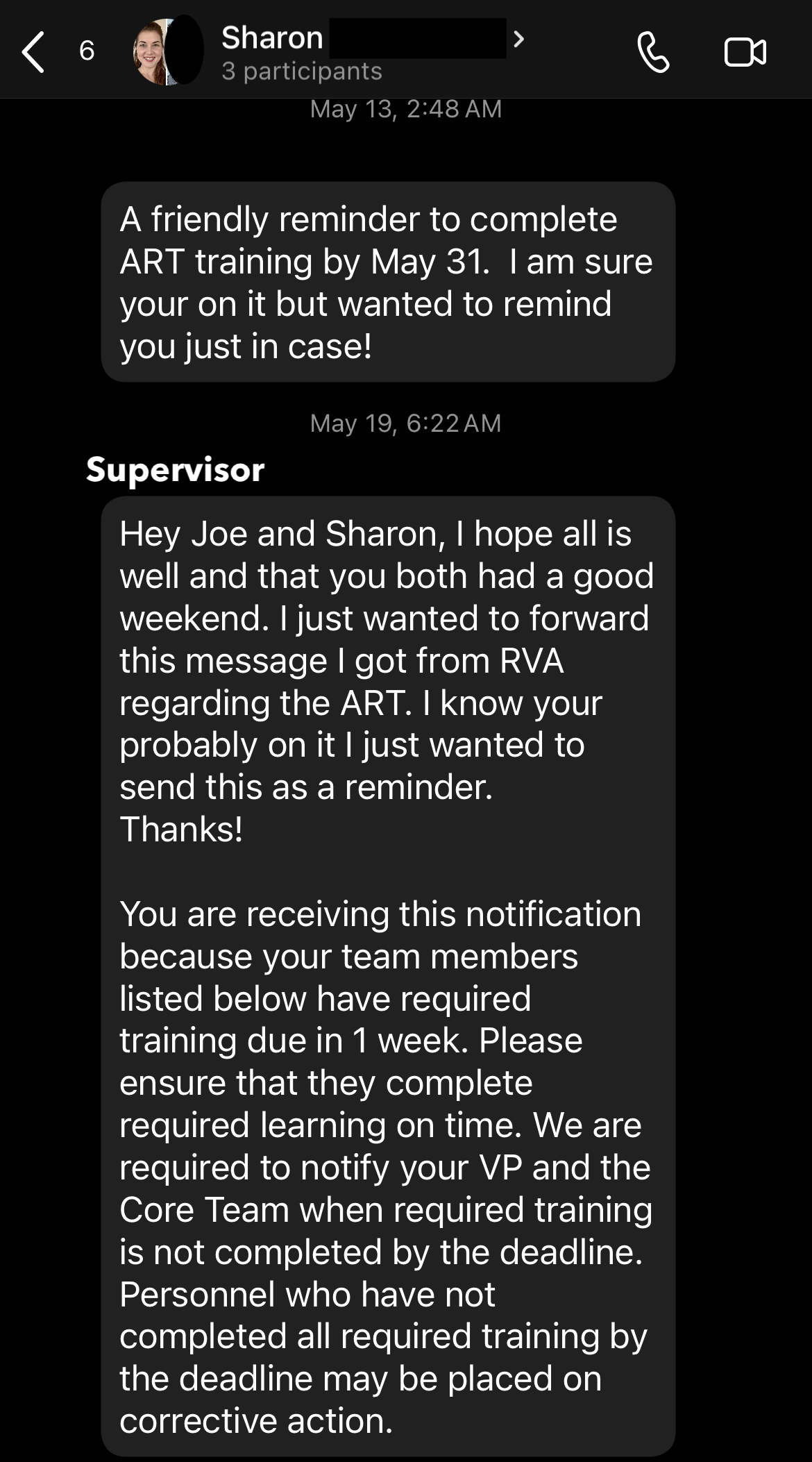
During our final weeks in Kazakhstan, we were required to complete IMB’s annual Abuse Response Training.
Under ordinary circumstances, this would have been routine.
It was not routine for us.
Much of the training focused on recognizing misconduct, reporting concerns, organizational responsibility, and accountability when policies are violated.
At the same time, we were receiving repeated reminders to complete the required training. One reminder stated that failing to do so could result in corrective action.
We understood the importance of the training.
We completed it.
Yet the experience carried a painful irony.
By that point, we had spent months reporting concerns involving safeguarding, workplace harassment, student welfare, and organizational responses.
As I worked through the training, I found myself repeatedly comparing what the training described with what we had experienced.
After completing the training, I wrote to PARA and HR leadership.
I explained that portions of the material had been deeply difficult to process in light of the previous months.
I then asked a series of questions.
Why had reports of workplace harassment not resulted in follow-up?
Why had I never been interviewed regarding concerns I had previously reported?
How would individuals who failed to comply with reporting obligations be held accountable?
What actions were being taken to ensure similar situations did not happen again?
These were not hypothetical questions.
They emerged directly from our experience.
I never received a response.
Looking Outside
By this point, the question was no longer whether we would leave Kazakhstan.
The question was whether anyone would meaningfully address the concerns we had spent months reporting.
None of the events described above, by themselves, caused us to begin looking outside the system.
Taken together, however, they led us to a conclusion we had resisted for many months.
We no longer believed that internal reporting pathways alone would be sufficient.
For months, we had continued reporting.
We had continued documenting.
We had continued asking questions.
We had continued trusting that the next conversation, the next meeting, or the next review might finally bring clarity.
Instead, we increasingly found ourselves navigating acknowledgements without outcomes, questions without answers, and decisions without explanations.
For the first time since concerns had emerged the previous fall, we began seriously considering whether outside organizations, outside institutions, and eventually outside authorities might need to become involved.
The story was no longer only about what had happened at Tien Shan International School.
It had become a question of what happens when people continue reporting concerns and can no longer determine whether anyone is listening.
This post is also published on Substack:
tsisaccountability.substack.com/p/aftermath-part-1-when-we-began-looking